
Ep. 006 - Settlers and Miners
Story 1: The Account of Thomas Harwood (1638)
Set in the early days of the Jamestown colony, this narrative chronicles the profound transformation of a young English settler who arrives in Virginia steeped in colonial bigotry and arrogance. After a panicked skirmish leaves him abandoned and dying of fever in the wilderness, he is rescued and nursed back to health by Nantaquas, a young Powhatan warrior. Living among the native people for six weeks, Thomas realizes that everything his leaders preached about the "savages" was a lie; he witnesses a society defined by sophisticated agronomy, deep communal justice, and a shared humanity. Returning to a disease-ridden, spiteful Jamestown, Thomas becomes an interpreter, using his unique position to subtly protect the Powhatan people from the blind greed of the English. Years later, following the devastating war of 1622 that permanently fractured their peace, an older Thomas reflects on the tragedy of an empire that treats the land as a carcass to be sold rather than a mother to be nurtured, preserving his account as a testament that before the blood dried, two vastly different cultures found a way to see each other as equal humans.
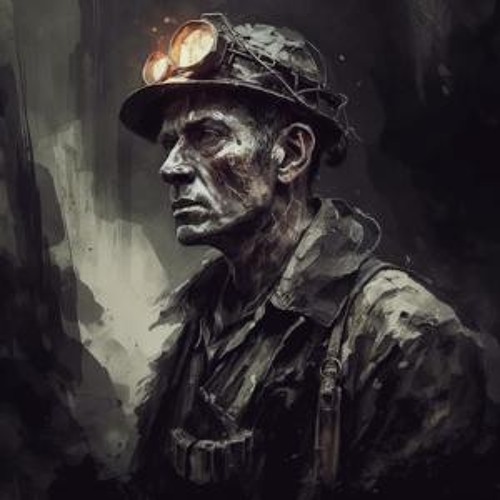
Story 2: The Rhondda Mine Disaster (1934)
Set against the stark backdrop of the Great Depression in South Wales, this story captures the fierce communal solidarity of a Welsh mining town during a catastrophic underground collapse at the Blaencreg Pit. When five miners—including young boys and fathers—are trapped beneath a massive wall of blue shale, Gwilym Vaughan leads a rescue brigade into a perilous, shifting mountain of stone. As the hours tick past and the ruthless colliery manager threatens to seal the mine to save corporate profits, the village unites; led by the fierce defiance of a miner’s wife, Sian, the community forms a human wall to force the owners to give them more time. Overcoming physical exhaustion, toxic air, and deep-seated panic, rescue teams from neighboring valleys join the effort, digging with their bare hands in a human chain to successfully pull all five men out of the blackness. The ordeal serves as a moving reminder that while the coal industry dictated their harsh physical lives, it was their unbreakable devotion to one another that kept the spirit of the valley alive.
Short stories from WWI and WW2

The Account of Sergeant Arthur Green, 11th (Service) Battalion, East Yorkshire Regiment. The Somme (The Crushing Weight of Industrial Warfare)
The story is a gritty, visceral account of industrial-scale slaughter during World War I, told through the dry, pragmatic voice of Sergeant Arthur Green. The narrative focuses on the physical and sensory overload of the trenches, stripping away any lingering romanticism of Edwardian patriotism
The Ledger of Saint-Denis (The Cold Architecture of Paranoia)
The second story is a tense, cinematic psychological thriller set in Nazi-occupied Paris on the eve of D-Day, experienced through Geneviève Laurent ("Clara"), a woman whose survival relies entirely on her ability to blend into the mundane fabric of a defeated city.
Ep. 003 - Yeti adventures and getting lost in the forest of India
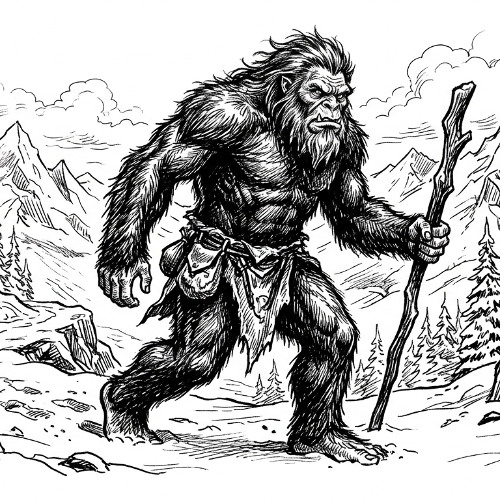
Short stories of adventure, based on real events and myths from around the globe. The emerald labrynth: A botanist in the forests of 1930's India is lost, and stalked by a Leopard. Yeti Tibeti: A groups of explorers and mountaineers run into trouble on Mount Everest, and are helped by a mysterious creature.
Short stories of adventure, based on real events and myths from around the globe. The emerald labrynth: A botanist in the forests of 1930's India is lost, and stalked by a Leopard. Yeti Tibeti: A groups of explorers and mountaineers run into trouble on Mount Everest, and are helped by a mysterious creature.
Episode 002 - Wilderness Adventures
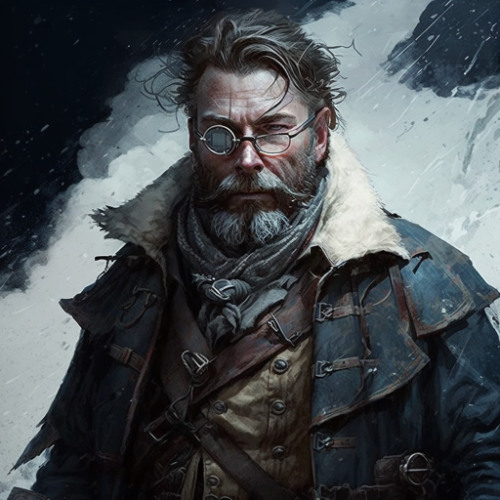
Three stories of wilderness adventures, and they're based on real life accounts.
Three stories of wilderness adventures, and they're based on real life accounts.
Story 1: In Britain, the earth beneath our feet is rarely just dirt. In Stockport, a mile of red sandstone tunnels once sheltered thousands from the Blitz. In Exeter, medieval stone passages built for water pipes still snake beneath the High Street. And in Nottingham, over 800 caves and tunnels—some used as tanning pits, others as secret siege routes like Mortimer’s Hole—riddle the foundations of the city.
This is a story of what happens when you find a door that was never meant to be reopened.
Story 2: The Account of Percival H. Sterling
Extract from the Journals of the Zambezi Expedition, 1892
The sun reigns here as a most pitiless sovereign over the Luangwa Valley, dispensing its tyranny without reprieve or mercy. For three days past I have been abandoned to its dominion, my porters having fled in a fit of superstitious terror at the nocturnal lamentations of what they termed the “night-shouter”—by all evidence a hyena of uncommon magnitude and diabolical voice. In their panic they decamped with my provisions entire, including the precious crates of quinine and, with a cruelty I can scarcely commit to paper, my final tin of biscuits.
Thus am I left to contend with the wilderness in a state of most disagreeable reduction: armed with but a Martini-Henry rifle, a mere four cartridges, and a compass which, in what I can only construe as a fit of mechanical perversity, has taken to revolving upon its axis with mocking indifference to the cardinal points.
Story 3: The White Stasis: This story is inspired by several accounts from Reddit’s r/survival and r/backcountry communities—specifically threads regarding "The Sucking Sound" of a sudden whiteout and the psychological phenomenon known as "The Third Man Factor."

4 Original Short Stories Based On Real Events
Today I are be most trying double exposures, in-camera.
Canon EOS 5DRS


Whether you’re a skeptic or a true believer, there’s no denying the chill that climbs your spine when the lights go out and the floorboards start to creak.
Welcome to Have You Ever Met, the place where we pull back the veil and listen to the things that go bump in the night. I’m your host, [Your Name], and every week, we share firsthand accounts of the unexplained—from restless spirits and glitch-in-the-matrix moments to encounters with things that simply shouldn't exist.
These aren't just urban legends or campfire tales. These are the real stories of ordinary people who stepped into the extraordinary and lived to tell the tale. So, lock your doors, turn down the lights, and keep your eyes on the shadows. You’re listening to Have You Ever Met.
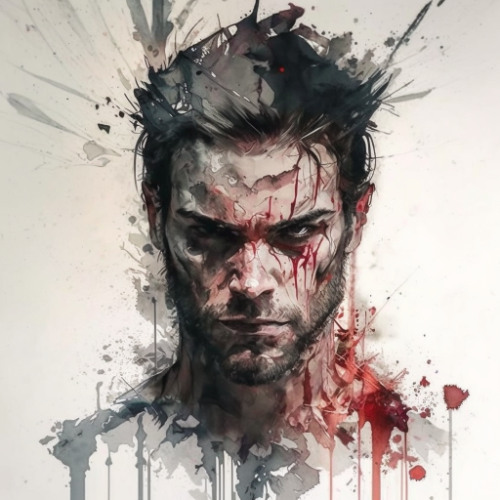
Five stories from real life people who have encountered serial killers and murderers and survived - from the man who rescued a woman fleeing the I5 killer, to meeting the FBI's most wanted https://ift.tt/zQybERd
Four true life encounters with murderers and serial killers https://ift.tt/MC2LoxA

Some spooky real life encounters taken from posts in Reddit and Quora...featuring tales of Jeffery Dahmer, Jerry Brudos, Bob Badella and other despicable human beings. https://ift.tt/6mUpvBy
True life stories from reddit and Quora about meeting serial killers for real. https://ift.tt/vZzbxCi

I popped over the border to Wales and got a few snaps. As per usual I hated 99% of the pictures I took, but I did like these muted images I captured in a Welsh national museum in St Fagans near Cardiff, there was something haunting about the empty houses and buildings in this wonderful location.
I used my EOS 5DSR and Sigma 35mm f1.4 lens mostly.


A compilation of true life stories from Reddit, from people who have met serial killers. https://ift.tt/OdP5zyq

Juan Carlos Chavez was convicted in 1998 for the first-degree murder, kidnapping, and sexual battery of nine-year-old Samuel James "Jimmy" Ryce. According to his confession, on September 11, 1995, Chavez abducted Jimmy at gunpoint from a school bus stop in Redland, Florida. He then took the boy to his trailer, where he sexually assaulted him. Approximately four hours later, when Jimmy tried to escape, Chavez shot and killed him. Two days after the murder, Chavez dismembered Jimmy's body and hid the remains in concrete inside three plastic planters. The remains were discovered three months later near Chavez's residence, and he confessed to the crime after a 55-hour interrogation. In 1998, Chavez was found guilty on all charges: first-degree murder, sexual battery on a person less than 12 years old, and armed kidnapping. He received a death sentence for the murder and consecutive life sentences for the kidnapping and sexual battery. Juan Carlos Chavez was executed on February 12, 2014. https://ift.tt/jK2c6yf
High Dynamic Range Black & White photography isn't as common as it should be. I like it. Really like it
High Dynamic Range (HDR) black and white photography is a technique that combines multiple exposures of the same scene to capture a wider range of tonal detail than a single exposure can record.1 This is particularly useful in black and white photography, where the absence of color places greater emphasis on contrast and tonal variations.
Here's a breakdown of key aspects:
What is HDR?
- Dynamic Range: Refers to the difference between the lightest and darkest tones in an image. Scenes with high dynamic range (e.g., a bright sky and dark shadows) can be challenging for cameras to capture in a single exposure, often resulting in lost detail in either the highlights or the shadows.2
- HDR Technique: Involves taking several photos of the same scene with different exposure settings. These images are then merged using software to create a single image with a significantly expanded dynamic range, retaining detail in both bright and dark areas.3
- Enhanced Tonal Depth: HDR allows you to capture subtle gradations in tone, from deep blacks to bright whites, revealing details that might be lost in a standard black and white conversion.4 This creates richer and more nuanced monochrome images.
- Increased Contrast Control: By merging multiple exposures, you gain greater control over the overall contrast and the local contrast within different areas of the image during post-processing.5
- Texture and Detail: HDR can bring out microtextures and subtle details in both highlights and shadows, adding depth and visual interest to black and white photographs.6
- Creative Vision: HDR in black and white can be used to create dramatic and impactful images, pushing beyond the limitations of a single exposure to achieve a specific artistic vision.
- Shooting for HDR:
- Bracketed Exposures: The most common method involves taking at least three shots: one normally exposed, one underexposed (to capture highlight detail), and one overexposed (to capture shadow detail). More exposures can be used for scenes with extreme dynamic range.
- Tripod: Using a tripod is crucial to ensure that the multiple exposures are perfectly aligned.
- RAW Format: Shooting in RAW format captures the maximum amount of information, providing greater flexibility during the HDR merging and black and white conversion process.7
- Consistent Aperture: Maintain the same aperture for all bracketed shots to ensure consistent depth of field.8 Adjust only the shutter speed.
- HDR Software:
- Software like Adobe Photoshop, Lightroom, Photomatix Pro, and others offer HDR merging capabilities.9
- These programs combine the bracketed exposures into a single HDR image, often allowing you to adjust parameters like tone mapping, detail enhancement, and ghost reduction (for moving objects).
- Black and White Conversion:
- The black and white conversion can be done either before or after the HDR merge, depending on your workflow and creative preference.
- Converting after the HDR merge allows you to leverage the full tonal range captured in the HDR image for a more nuanced monochrome result.
- Software like Nik Silver Efex Pro offers advanced controls for black and white conversion, including simulating different film types and applying tonal adjustments based on color channels.10
- Post-Processing:
- After the HDR merge and black and white conversion, further adjustments can be made to contrast, brightness, dodging and burning (local adjustments of highlights and shadows), and sharpness to refine the final image.11
- Wider Tonal Range: Captures a broader spectrum of grays, leading to more detail in both bright and dark areas.
- Greater Detail and Texture: Enhances the visibility of fine details and textures throughout the tonal range.12
- Increased Creative Control: Provides more flexibility in shaping the contrast and mood of the final black and white image.
- Overcoming Limitations: Allows photographers to effectively capture high-contrast scenes that would be difficult or impossible with a single exposure in black and white.13
 |
| Chalk Stone |


